
Raksha Bandhan is a Hindu festival to celebrate the love between brothers and sisters. It is also celebrated by Jaians, and observed by Sikhs as Rakhardi.
In Sanskrit, raksha means “protection” and bandhan means “to tie.”
This year in 2021 this traditional festival is on 22nd September . It is commonly celebrated in south Asia but now this celebration can be seen all over the world.
Raksha Bandhan is in the last day of Shrawan, which is why it is also called Shravani (Sawani) or Saloono.
Rakhi Purnima – Rakhi purnima is celebrated in the northern and northwestern parts of India with a lot of zest and esprit. Here Rakshabandhan is the celebration of the chaste bond of love between a brother and a sister.
Nariyal Purnima – It is called Nariyal Purnima or coconut full moon in the Western Ghats that includes the states of Gujarat, Maharashtra, Goa and Karnataka. Here Rakshabandhan signifies the beginning of a new season for those dependent on sea.
Avani Avittam / Upakarmam – Rakhi Purnima is called Avani Avittam in southern parts of India that is in Kerala, Andhra Peadesh, Tamil Nadu and parts of Orissa and is an Important day for the Brahmins. The day is called Upakarmam by the Brahmins. They change their Holy threads on this day.
Kajari Purnima – The Rakshabandhan day is called Shravani or Kajari Purnima in Madhya Pradesh, chattisgarh, Jharkhand and Bihar. Rakshabandhan, here is an important day for farmers and women who have sons.
Pavitropana – The Rakshabandhan day is celebrated as Pavitropana in Gujarat. Rakshabandhan is the day when people perform the grand pooja or the worship of the three eyed God, Lord Shiva. It is the culmination of the prayers done through out the year.
Other Names – Every region has a different name and celebration for the Rakhi Purnima. The common link is that tying of rakhi on rakshabandhan is now performed as a part of all the ceremonies
Preparation of Rakhi Festival
Generally, the fancy Rakhis and delicious sweets are prepared long before the Shravana Purnima. According to the Indian tradition, the family members get ready for the rituals early in the morning. They take a bath to purify mind and body before starting any preparations. Sisters prepare the puja thali which consists of roli, tilak, Rakhi threads, rice grains, aggarbattis (incense sticks), diyas and sweets. After offering the rituals to the deities of the family, the sister perform aarti of their brothers and ties Rakhi on their wrist. Then, they put kumkum powder on the forehead of their brother and offer sweets.After her prayer for a long life for her brother, she says that she is tie the ever-protective Raksha to her brother’s wrist. In return, brothers pampers and blesses the sisters and promises to protect her from all the evils of this world. He also present a token of his love and affection as a Rakhi gift. The rituals performed on Raksha Bandhan may differ from place to place but they carry the same aura throughout the globe.
Raksha Bandhan In History
The traditional Hindu festival ‘Raksha Bandhan’ (knot of protection) was came into origin about 6000 years back when Aryans created first civilization – The Indus Valley Civilization. With many languages and cultures, the traditional method to Rakhi festival celebration differs from place to place across India. Following are some historical evidences of Raksha Bandhan celebration from the Indian history.
Rani Karnawati and Emperor Humayun
The story of Rani Karnavati and Emperor Humayun is the most significant evidence in the history. During the medieval era, Rajputs were fighting Muslim invasions. Rakhi at that time meant a spiritual binding and protection of sisters was foremost. When Rani Karnawati the widowed queen of the king of Chittor realised that she could in no way defend the invasion of the Sultan of Gujarat, Bahadur Shah, she sent a rakhi to Emperor Humayun. The Emperor touched by the gesture started off with his troops without wasting any time.
Alexander The Great and King Puru
The oldest reference to the festival of rakhi goes back to 300 B.C. at the time when Alexander invaded India. It is said that the great conqueror, King Alexander of Macedonia was shaken by the fury of the Indian king Puru in his first attempt. Upset by this, Alexander’s wife, who had heard of the Rakhi festival, approached King Puru. King Puru accepted her as his sister and when the opportunity came during the war, he refrained from Alexander.
Lord Krishna and Draupathi
In order to protect the good people, Lord Krishna killed the evil King Shishupal. Krishna was hurt during the war and left with bleeding finger. Seeing this, Draupathi had torn a strip of cloth from her sari and tied around his wrist to stop the bleeding. Lord Krishna, realizing her affections and concern about him, declared himself bounded by her sisterly love. He promised her to repay this debt whenever she need in future. Many years later, when the pandavas lost Draupathi in the game of dice and Kauravas were removing her saari, Krishna helped her divinely elongating the saari so that they could not remove it.
King Bali and Goddess Lakshmi
The demon king Mahabali was a great devotee of lord Vishnu. Because of his immense devotion, Vishnu has taken the task of protecting bali’s Kingdom leaving his normal place in Vikundam. Goddess lakshmi – the wife of lord Vishnu – has became sad because of this as she wanted lord Vishnu along with her. So she went to Bali and discussed as a Brahmin woman and taken refuge in his palace. On Shravana purnima, she tied Rakhi on King Bali’s wrist. Goddess Lakshmi revealed who she is and why she is there. The king was touched by Her and Lord Vishnu’s good will and affection towards him and his family, Bali requested Lord Vishnu to accompany her to vaikuntam. Due to this festival is also called Baleva as Bali Raja’s devotion to the Lord vishnu. It is said that since that day it has become a tradition to invite sisters on sravan pournima to tie sacred thread of Rakhi or Raksha bandan.
The legend in the Bhavishya Puran
The legend refers to a war between the Gods and the Demons. The demon King Brutra was advancing and the Gods lead by lord Indra, were on verge of defeat. The king of Gods, Indra approached Guru Brihaspati to find a solution to the situation. Brihaspati asked Indra to tie a sacred thread on his wrist, powered by the sacred mantras on the Shravan Purnima. Lord Indra’s Queen Sachi also called Indrani, empowered the thread and tied it on to his hand on the decided day. The power of the sacred thread called Raksha helped the Gods to victory.
Yama and the Yamuna
It is said that the Raksha Bandhan was a ritual followed by Lord Yama (the Lord of Death) and his sister Yamuna. Yamuna tied rakhi to Yama and bestowed immortality. Yama was so moved by the serenity of the occasion that he declared thar whoever gets a rakhi tied from his sister and promised her protection will become immortal.
In the Epics
Raksha Bandhan finds a mention in Mahabharata when Lord Krishna advised Yudhishthir to perform the ceremony to protect himself and the army from the dangers of the war. It is said that Kunti, the mother of the Pandavas tied rakhi to her grandson Abhimanyu and Draupadi to lord Krishna.
In Modern History
In 1905, the Raksha bandhan ceremony was observed as a celebration of nationalism among the Hindus and the Muslims of the then undivided Bengal against the British Raj.
On this day, the Marathi people change their Janeu by going to the banks of the river or sea and worship the sea.
This is the custom of tying Chaparakhi or Lumba in Rajasthan. Ram Rakhi is bound only to God, while Chatha Rakhi binds the Bhadhis to Nandes.
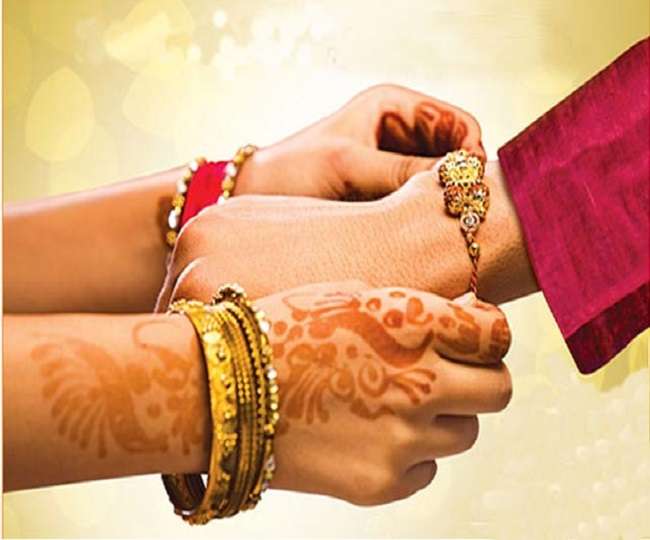
So It is one of the biggest festivals celebrated in India as a tribute to the siblings. The rakhi is traditionally given to a brother from his sister. It represents the sister’s promise to pray for her brother and the brother’s vow to protect his sister.
@manishanandan
 LIVE BY CHOICE NOT BY CHANCE!!!!
Leave a comment