
INTRODUCTION
Holi is a major festival in the Hindu religion. It celebrates the arrival of spring, the end of winter, the blossoming of love and for many, it is a festive day to meet others, play and laugh, forget and forgive, and repair broken relationships.
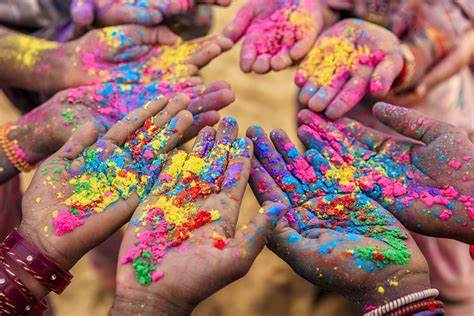
This festival also celebrates the beginning of a good spring harvest season. It lasts for a night and a day, starting on the evening of the Purnima (Full Moon Day) falling in the Hindu calendar month of Phalguna, which falls around the middle of March in the Gregorian calendar. The first evening is known as Holika Dahan (burning of Demon Holika) or Chhoti Holi and the following day as Holi, Rangwali Holi, Dol Purnima, Dhuleti, Dhulandi, Ukuli, Manjal Kuli, or Shigmo

Holi is an Ancient Indian religious festival that has also become popular outside of India. In addition to India and Nepal, the festival is celebrated by the South Asian diaspora in countries such as—————
Suriname, Guyana, Trinidad and Tobago, Jamaica, South Africa, Mauritius, Fiji, Malaysia, Singapore, the United Kingdom, the United States, the Netherlands, Canada, Australia, and New Zealand. In recent years, the festival has spread to parts of Europe and North America as a spring celebration of love, frolic, and colours.
HISTORY OF HOLI
Holi is an ancient festival of India and was originally known as ‘Holika’. The festivals find a detailed description in early religious works such as Jaimini’s Purvamimamsa-Sutras and Kathaka-Grhya-Sutras. Historians also believe that Holi was celebrated by all Aryans but more so in the Eastern part of India.
It is said that Holi existed several centuries before Christ. However, the meaning of the festival is believed to have changed over the years. Earlier it was a special rite performed by married women for the happiness and well-being of their families and the full moon (Raka) was worshipped.
Besides having a detailed description of the Vedas and Puranas such as Narad Purana and Bhavishya Purana, the festival of Holi finds a mention in Jaimini Mimansa. A stone inscription belonging to 300 BC found at Ramgarh in the province of Vindhya has a mention of Holikotsav on it. King Harsha, has mentioned Holi Utsav in his work Ratnavali which was written during the 7th century.
The famous Muslim tourist – Ulbaruni too has mentioned Holi Utsav in his historical memories. Other Muslim writers of that period have mentioned, that Holi Utsav was not only celebrated by the Hindus but also by the Muslims.
The festival of Holi also finds a reference in the sculptures on walls of old temples. A 16th-century panel sculpted in a temple at Hampi, capital of Vijayanagar, shows a joyous scene of Holi. The painting depicts a Prince and his Princess standing amidst maids waiting with syringes or pichkaris to drench the Royal couple in the coloured water.
A 16th century Ahmednagar painting is on the theme of Vasanta Ragini – spring song or music. It shows a royal couple sitting on a grand swing, while maidens are playing music and spraying colours with pichkaris.
There are a lot of other paintings and murals in the temples of medieval India which provide a pictorial description of Holi. For instance, a Mewar painting (circa 1755) shows the Maharana with his courtiers. While the ruler is bestowing gifts on some people, a merry dance is on, and in the centre is a tank filled with coloured water. Also, a Bundi miniature shows a king seated on a tusker and from a balcony above some damsels are showering gulal (coloured powders) on him.
Legends and Mythology
In some parts of India, especially in Bengal and Orissa, Holi Purnima is also celebrated as the birthday of Shri Chaitanya Mahaprabhu (A.D. 1486-1533). However, the literal meaning of the word ‘Holi’ is ‘burning’.
- There are various legends to explain the meaning of this word, most prominent of all is the legend associated with demon king Hiranyakashyap. According to the Hindu mythology of Bhagavata Purana which reveals that Hiranyakashipu was the king of demonic Asuras and had earned a boon which made him gain five special powers. He asked everyone to worship only him. But his son, Prahlada disagreed and devoted Lord Vishnu. Infuriated Hiranyakashipu gave cruel punishments and finally Holika, Prahlada’s evil aunt tricked him into sitting on a pyre with her. As the fire roared, Holika burned while Prahlada survived. At this time of dusk, Vishnu appeared and eviscerated and killed the king with his lion claws. This is one story behind the Holi celebration.
2. Another story tied to the Holi Festival is that of Radha and Krishna. As the eighth incarnation of the Hindu god Vishnu, Krishna is seen by many as the supreme god. Krishna is said to have blue skin because as legend has it, he drank poisonous milk from a demon when he was a baby. Krishna fell in love with the goddess Radha, but feared she would not love him because of his blue skin – but Radha allowed Krishna to dye her skin with colour, making them a true couple. On Holi, Festival participants apply colour to each other’s skin in honour of Krishna and Radha.
3. In the Southern part of India, people celebrate Holi to pay homage to Kamadeva -the Love God, who had to face the wrath of Lord Shiva, when he had hit him with his arrow in order to divert Shiva’s attention to Parvati, who would go on to become his wife. Kamadeva was burned to ashes and his distraught wife Rati pleaded with Lord Shiva to bring her husband back to life. Holi here is known as ‘Kamavilas’ and people express sadness over the demise of Kamadeva by singing traditional folk songs detailing the grief of Rati when she gets to know about the death of her beloved.
What do The Colors in Holi Represent?

Although celebrating the festival is common but the mode and the protocols of celebrating vary with the variation of place and regions. But the most common practice observed and followed is using ‘Gulal’ or colours in the form of dry powder. Holi is a festival of colours. Even watercolours are being used. ‘Gulal’ is the local language a significant part of the celebration is custom made colour preparation from various ingredients. Such components have changed over time. Artificial sources of chemicals have taken place over natural elements like vegetable and plant sources, flower petals, etc. which were used in the olden days.
DIFFERENT TYPES OF HOLI CELEBRATIONS IN INDIA
1. Phoolon ki Holi, Vrindavan and Pushkar
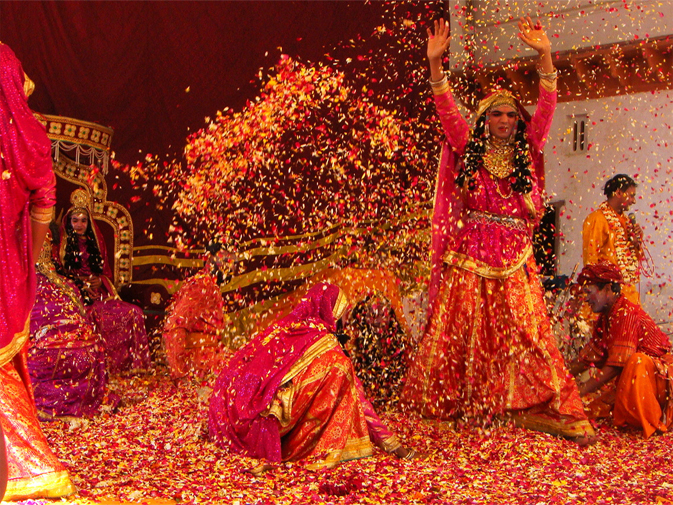
Vrindavan is the holy city surrounded by places that reflect the love of Radha and Krishna. The Holi festival is celebrated with grandeur to commemorate the centuries-old love of the playful couple. The color play starts days before the day of Holi and people are sprinkled with flowers, holy water, and herbal colors in Krishna temples.
Similarly, the ‘Phoolon ki Holi’ or ‘Holi of Flowers’ in Pushkar sets the excitement bar very high. Both the places attract tourists from around the world. One must never miss the experience of being covered with fragrant flower petals and vibrant colours of Holi.
.
2. Royal Holi, Udaipur

Udaipur is a city with a rich history of royal heritage. The royal family and their traditions add more beauty to every festival. The rituals of Holi include the Royal ‘Mewar Holika Dahan’, playing with colours, and even fireworks. The preparation and decoration start quite early to accomplish the most elegant views and experiences on the day of Holi. The preceding evening is enjoyed to the fullest when people dance around the Bonfire to the mesmerizing rhythms of folklore.
The unmatchable beauty of the royal palaces is enhanced with magnificent lights and flowers the city palace is the most preferred spot for celebrations. The preparation starts quite early and numerous temples are decorated to organize the rituals of Holi. There are magnificent processions with elephants, camels, and horses adorned elegantly. To witness the imperial grandiose of Udaipur covered in the colours of Holi is a sight to behold.
3. Lathmar Holi, Uttar Pradesh
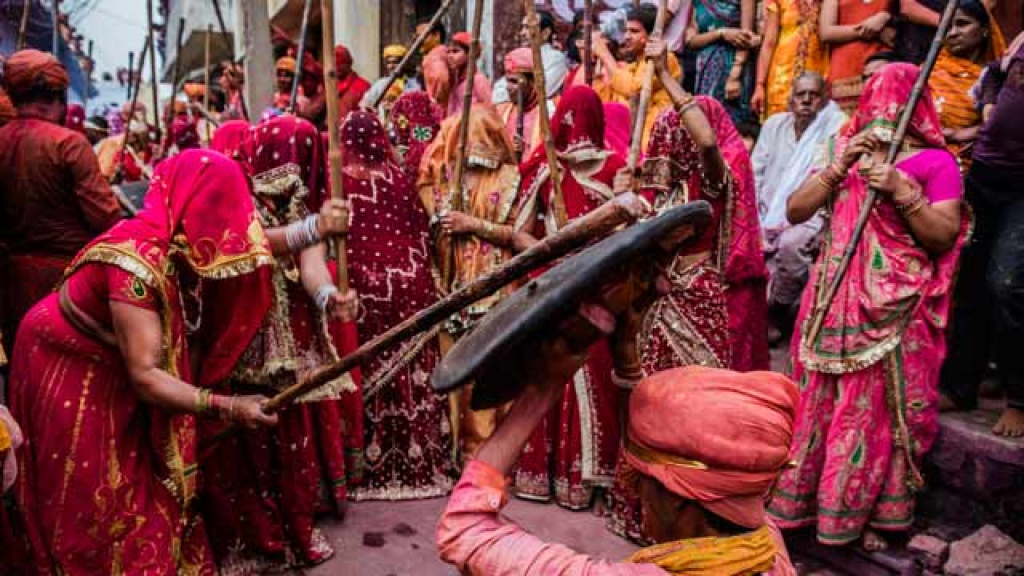
The unique tradition of Lathmar Holi in the Mathura Region of Uttar Pradesh attracts a lot of attention. It is an added local ritual that brings more fun and laughter to the festival of Holi. The lovely couple Radha and Krishna hold great significance in the hearts of people. The legend of Krishna being driven away from Barsana when he came to colour Radha is imitated. Men from Nandgaon visit Barsana to colour women, in turn, women beat up the men and every spectator bursts into laughter. The Lathmar Holi is celebrated with great excitement before the actual festival. Wish to see the ancient legends come to life? Celebrate Holi in Uttar Pradesh.
4. Shigmo, Goa
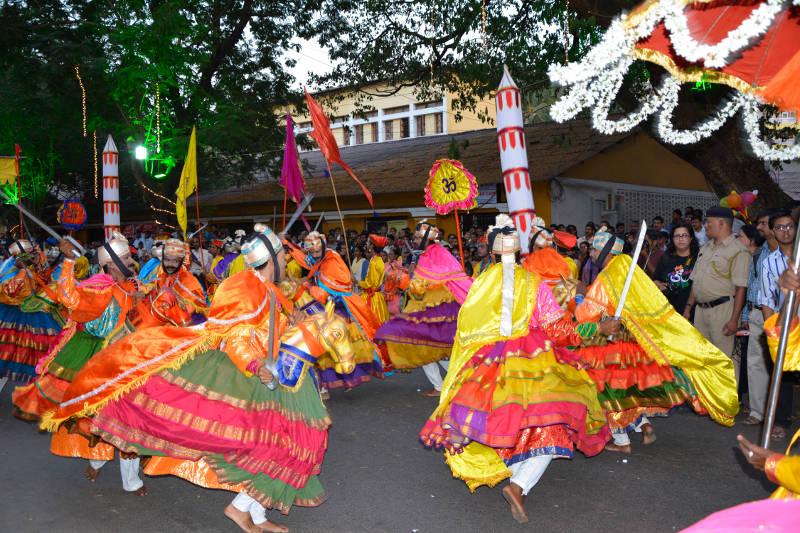
The experience of Holi with natural colours and a rural vibe is what the festival of Shigmo has for the visitors. It is a pre-Holi tradition celebrated in Goa for the duration of 5 to 14 days celebrated in February or March. The hotspot for the most entertaining rituals remains the rural areas. The local people dress in beautiful attires and dance on the streets in groups carrying out a whole procession. The festival turns into a carnival of colours brimming with excitement and exhilaration.
5. Rang Panchami, Maharashtra
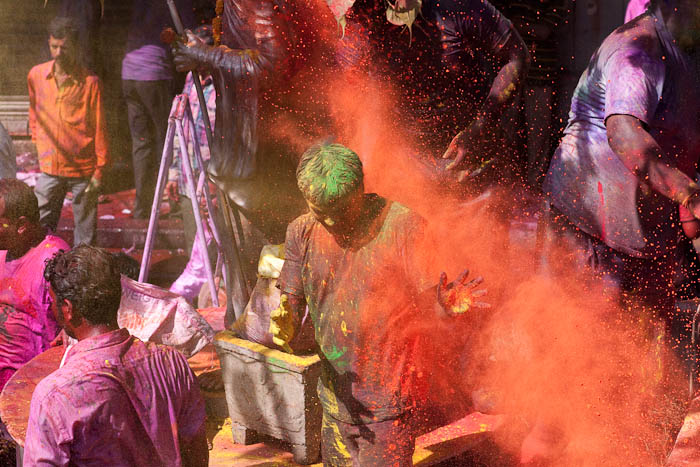
A day dedicated majorly to bright colours which are quite significant in the Hindu ritual of worshipping or invocating Gods or Goddesses. The festival of Rang Panchami is celebrated five days before Holi. It is widely popular in the state of Maharashtra. This is the best spot to closely observe the religious and spiritual side of Holi along with the vibrant festive side of the occasion. It is celebrated with great enthusiasm by the rural Marathi people who welcome visitors with open arms.
6. Hola Mohalla, Punjab

The Sikhs of Punjab are recognized for their excessive bravery, social service, and frankness. The festival of Hola Mohalla is quite famous for its artistic performers amidst the colours of Holi. It is celebrated for three days in the month of March. The dates are decided as per the lunar calendar and mostly coincide with the festival of colours. The main event takes place at Anandpur Sahib, a place that holds great historical and religious importance for the community. Visiting Punjab at the time of Holi is like a breath of fresh air filled with a sense of belonging.
7. Dola Utsav, Odisha
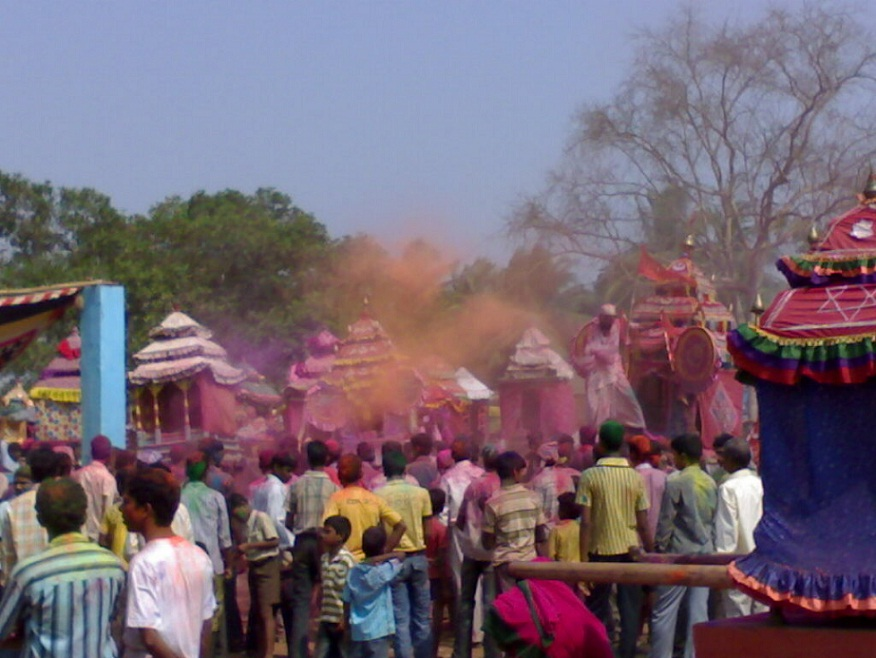
The Dola Utsav is a six-day long festival celebrated in the coastal region of Odisha. The essence of divinity is the centre of all the rituals performed to worship Lord Krishna and Radha. On the day of Dola Purnima, the idol of Lord Jagannath is brought out of the temple to allow the devotees to play Holi with them. The gathering turns into a procession of coloured people singing bhajans. Mostly, the festival of Holi is celebrated on the next day of Dola Purnima. Visit Odisha before Holi to be a part of the grand procession.
8. Phaguwa, Bihar
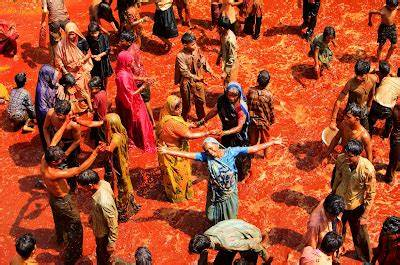
The exhilarating celebration of Holi is known as Phaguwa in the state of Bihar. The region celebrates Holi in its truest form, a day full of bright colours, splashing water, and dancing. The atmosphere is elevated with the sound of popular folk songs sung in the Bhojpuri dialect that might not be soothing but quite exciting to resist the movement of your feet. Amidst the chaos are the heaven of gujiya, dahi balle, and the famous lassi. The celebration of Phagunwa is a complete package to experience the ‘Desi Holi’ to its fullest in just one day. Don’t forget to visit Bihar to witness the fun-filled festival!
9. Basant Utsav, West Bengal
Holi is celebrated as Basant or Vasant Utsav in the West Bengal region. It is celebrated as a festival of spring and welcomes the blooming season with great enthusiasm and happiness. The celebration was inaugurated by the world-famous poet Rabindranath Tagore, then the hotspot of the festival remains the Shantiniketan University. The Utsav is highly reflective of the joy and beauty inculcated in the Bengali traditions. People dress up in beautiful traditional attires, have fun with colours, and satisfy their taste buds with the best Bengali sweets. Visit West Bengal on this Basant Utsav to have a rejuvenating experience of the festival of spring.
10. Baithaki or Khadi Holi, Uttarakhand
The beautiful hill station, Uttarakhand proves its uniqueness in the Holi celebration too. The state celebrates the festival in different styles- Baithaki Holi and Khadi Holi. People form tribes or groups and dance to the mesmerizing folk music that make up the ethnic elegance of the festival. The formation of these groups called toils starts months or weeks before the day of Holi. Khadi Holi is a celebration witnessed in rural areas. People wear traditional clothes and sing classical songs and divine ragas with the tunes of dhol. To dissolve yourself in the spiritual aspect of Holi this year, visit Uttarakhand.
11. Manjal Kuli, Kerala
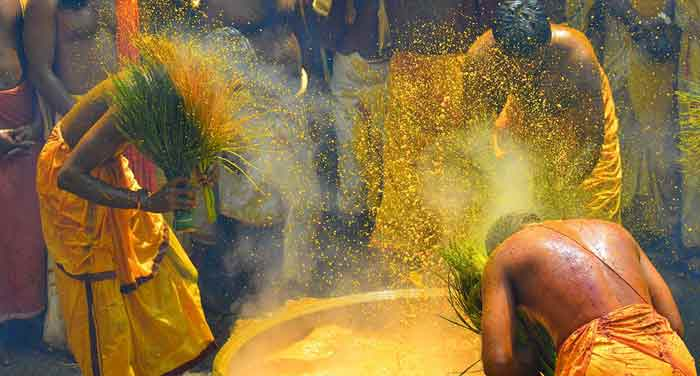
In the southern parts of India, the Holi celebration is mostly restricted to Kerala. The festival is celebrated as Manjal Kuli, translated to turmeric bath, in different temples of Kerala. The rituals are performed during the span of four days in several temples and mainly in the Konkani temple. The Kudumbi community celebrates the triumph of Goddess Durga over the demons on the day of the full moon in March. People enjoy the traditions by gathering at these temples, dancing, singing, and splashing the colour of turmeric water. Have a peaceful yet colourful celebration of Holi at the wonderful temples of Kerala.
12. Phagwah, Assam
The celebration of Holi goes on for 3-5 days in Assam and the festival is recognized as Phagwah. The first day is called banhutsava, the second day is called bhardoul, and the last day is called phakua or suweri. All the rituals are performed with great anticipation and belief. The celebration is dedicated to both the legends. Holika Dahan commemorates the victory of good, on the other hand, bhajan and folk songs are sung to celebrate the love of Radha and Krishna. Holi in Assam is not only full of delight, colours, water, and dance but also executes the religious practices with great dedication.
Food Items prepared
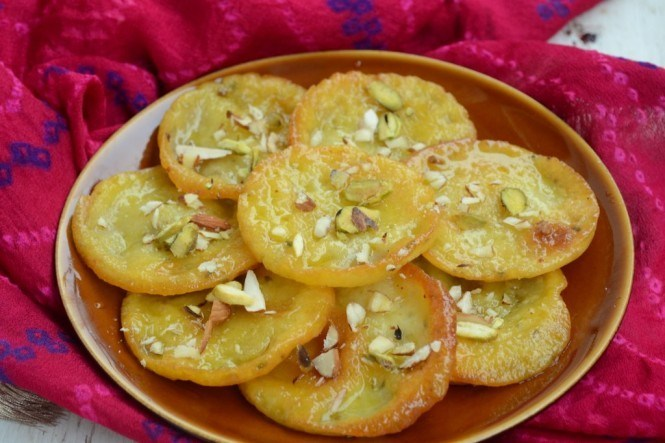
People celebrate the festival of love by savouring lip-smacking sweets and various delicacies. Various traditional food items are starting with Gujiya, Dahi Vada and ending with Kesari Malai Peda and Bhaang; people celebrate with immense joy and happiness. Different deceptively simple-looking drinks give tremendous flavour to the festival and escalate the spirit. Puaa Bihar dish with a crunchy and mildly sweet taste, Bhaang Thandai, Guijya, Moong Dal Kachauri, Malpua with the flavour of cardamom with sweet khoya, Dahi Vada are major food items.

HOW HOLI IS CELEBRATED
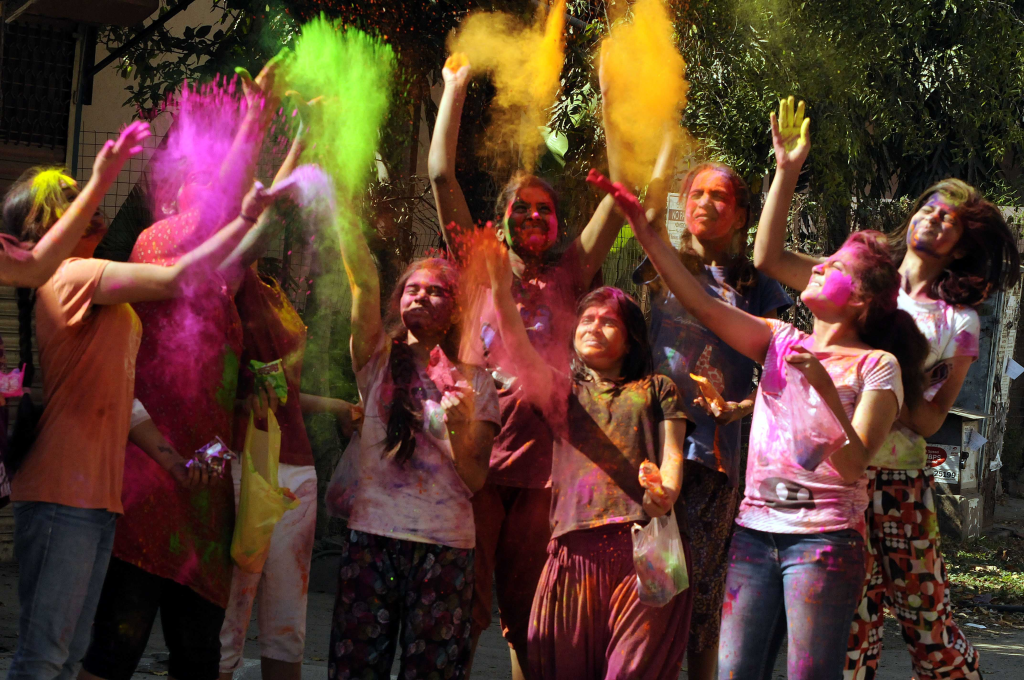
In India, the celebration of Holi lasts for two days although preparations can start weeks in advance. The main events of the celebration are the burning of Holika that takes place on the first evening of celebrations and the colour fight that occurs the next day.
- The first day of the celebrations is Holika Dahan, also known as Chhoti Holi or little Holi, and is when the religious rituals take place. The main event of Holika Dahan is a large bonfire where an effigy of Holika is burnt to symbolize the destruction of evil.

The building of the pyre for the Holika fire can start weeks in advance. Normally a large log is placed in a community space in every neighbourhood. Then leading up to the festival, people bring sticks and other combustible materials to add to the pyre until it becomes a large pile.
Many people will come to watch the fire and sing and dance around it. It is common to see people walking clockwise three times around the fire which is known as parikrama and is a common method of prayer.
The next morning, the ashes of the fire are collected because they are considered to be very auspicious.
2. The morning after Holika Dahan, on the day of Holi, is when the colour fight begins. This part of the festival isn’t about religion at all and is focused on just having fun and experiencing the joy of spring.
SIGNIFICANCE OF HOLI FESTIVAL
The Holi festival has a cultural significance among various Hindu traditions of the Indian subcontinent. It is the festive day to end and rid oneself of past errors, to end conflicts by meeting others, a day to forget and forgive. People pay or forgive debts, as well as deal anew with those in their lives. Holi also helps to bring society together and strengthen the secular fabric of our country.
Also, the tradition of the Holi is that even the enemies turn friends on Holi and forget any feeling of hardship that may be present. Besides, on this day people do not differentiate between the rich and poor and everybody celebrate the festival together with a spirit of bonhomie and brotherhood.
This helps in revitalising relationships and strengthening emotional bonds between people.
WISH YOU ALL A HAPPY AND COLOURFUL HOLI !!!!!!!!!!!!!!
BY – MANISHA NANDAN
 LIVE BY CHOICE NOT BY CHANCE!!!!
Leave a comment