
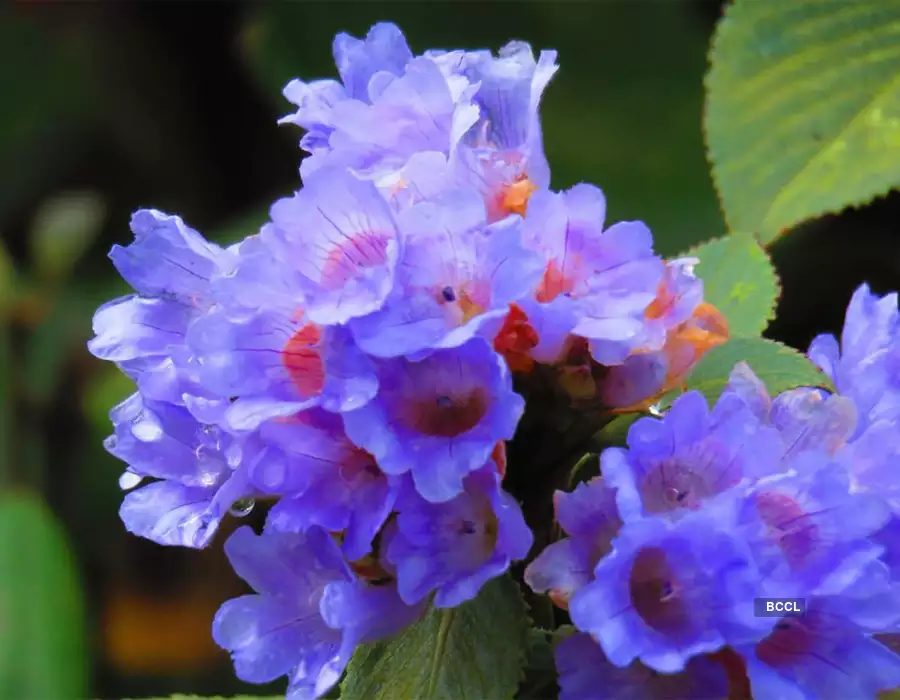
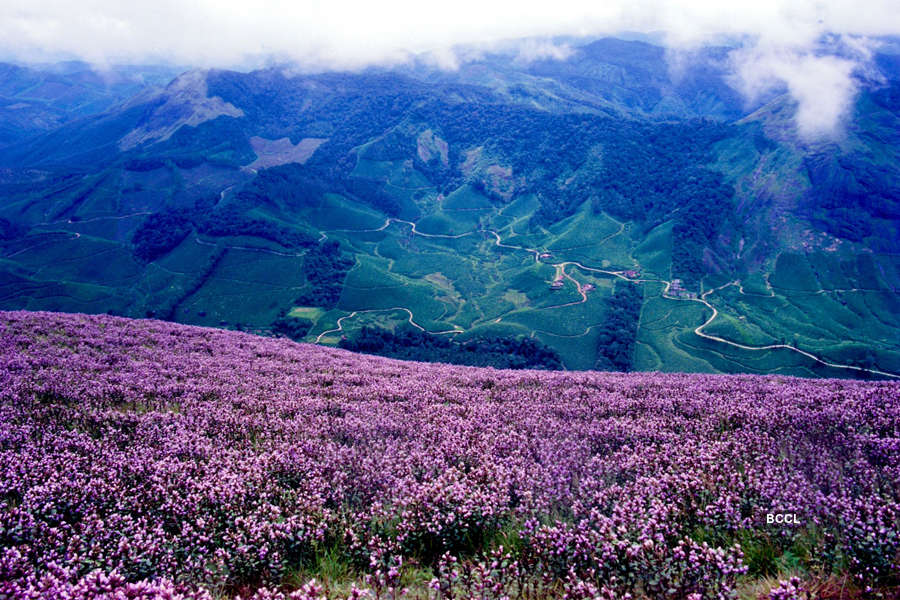
The flower you’re referring to is the Neelakurinji (scientifically known as Strobilanthes kunthiana). This rare and beautiful flower blooms once every 12 years in the Western Ghats, particularly in the hills of Munnar in Kerala, India. When in full bloom, the hills are covered in a carpet of blue, creating a stunning visual spectacle. The last major blooming event occurred in 2018, and the next one is expected in 2030.
Growth Cycle: One of the most remarkable features of Neelakurinji is its long flowering cycle. The plant blooms once every 12 years, a phenomenon known as gregarious flowering, where large populations of the plant bloom simultaneously. After blooming, the plants set seeds and die, and the cycle begins anew.
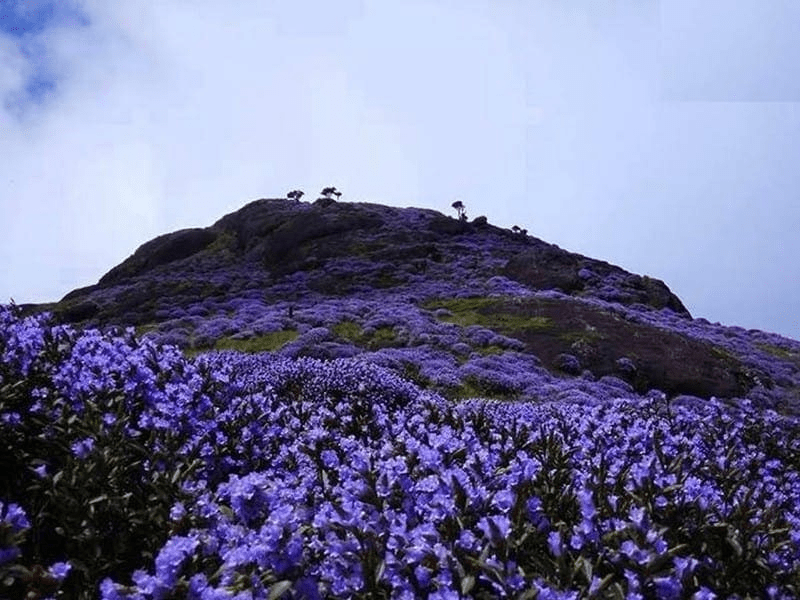
Habitat:
- Geographical Distribution: Neelakurinji is native to the Western Ghats of India, a biodiversity hotspot. The most famous and extensive blooms occur in the Nilgiri Hills, Palani Hills, and the hills of Munnar in Kerala.
- Elevation and Environment: The plant thrives at elevations between 1,300 to 2,400 meters above sea level. It prefers the shola grasslands, a unique ecosystem characterized by rolling grasslands interspersed with patches of dense montane forests.
IMPORTANCE OF FLOWER
he Neelakurinji flower holds significant cultural, ecological, and touristic importance in India:
- Cultural Significance:
- The blooming of Neelakurinji is deeply connected to local traditions and folklore in the Western Ghats. For the indigenous tribes, such as the Muthuvan, the blooming cycle of Neelakurinji is a marker of time, as it only blooms once every 12 years.
- Ecological Importance:
- Neelakurinji plays a crucial role in the ecosystem of the Western Ghats, which is a UNESCO World Heritage site and a biodiversity hotspot. The mass blooming of these flowers supports a variety of pollinators and contributes to the overall health of the forest ecosystem.
- Tourism:
- The blooming of Neelakurinji attracts tourists from all over the world, boosting the local economy. The sight of hills covered in a blanket of blue is a unique and mesmerizing experience, making it a major draw for nature enthusiasts and photographers.
- Conservation Awareness:
- The rarity of Neelakurinji and its specific blooming cycle highlights the importance of conserving the Western Ghats. Efforts to protect this region and its unique flora have gained momentum due to the global attention drawn by the Neelakurinji blooms.
The Neelakurinji flower is not just a botanical marvel but also a symbol of the rich natural heritage of the Western Ghats, emphasizing the need for environmental conservation.
ON VERGE OF EXTINCTION….…………..
he Neelakurinji flower (Strobilanthes kunthiana) faces threats that put it at risk of becoming endangered or even extinct in the future. These threats are primarily due to human activities and environmental changes:
- Habitat Destruction:
- The Western Ghats, where Neelakurinji blooms, are increasingly under pressure from deforestation, land conversion for agriculture, and infrastructure development like roads and tourism facilities. These activities reduce the natural habitat of the Neelakurinji, making it harder for the flower to thrive.
- Tourism Impact:
- While tourism provides economic benefits, it can also lead to environmental degradation. Uncontrolled tourism during the blooming period can result in trampling of plants, littering, and pollution, which damage the fragile ecosystem that supports Neelakurinji.
- Climate Change:
- Changes in climate patterns, such as altered rainfall and temperature, can disrupt the natural blooming cycle of Neelakurinji. Climate change may also affect the microclimate of the Western Ghats, making it less suitable for the flower’s growth.
- Invasive Species:
- The introduction of non-native plant species can outcompete Neelakurinji for resources like sunlight, water, and soil nutrients, further threatening its survival.
- Lack of Awareness and Conservation Efforts:
- While there are some conservation efforts in place, a lack of widespread awareness about the importance of Neelakurinji and its vulnerability means that necessary protective measures are often inadequate or underfunded.
Due to these factors, the Neelakurinji is considered vulnerable, and without effective conservation efforts, it could face a significant decline in the future, pushing it closer to extinction.
So……………………. It is imperative to safeguard these rare plant species. The Neelakurinji flower represents not only a botanical marvel but also the deep interconnection between nature, culture, and history in the Western Ghats. Its protection is vital for the conservation of the region’s abundant biodiversity and cultural legacy.
@nandasagec MANISHA NANDAN
PLZ DO LIKE SHARE AND SUBSCRIBE TO MY BLOG TO STAY TUNED FOR MORE
HAPPY READING!
 LIVE BY CHOICE NOT BY CHANCE!!!!
Leave a reply to Deepa Cancel reply